
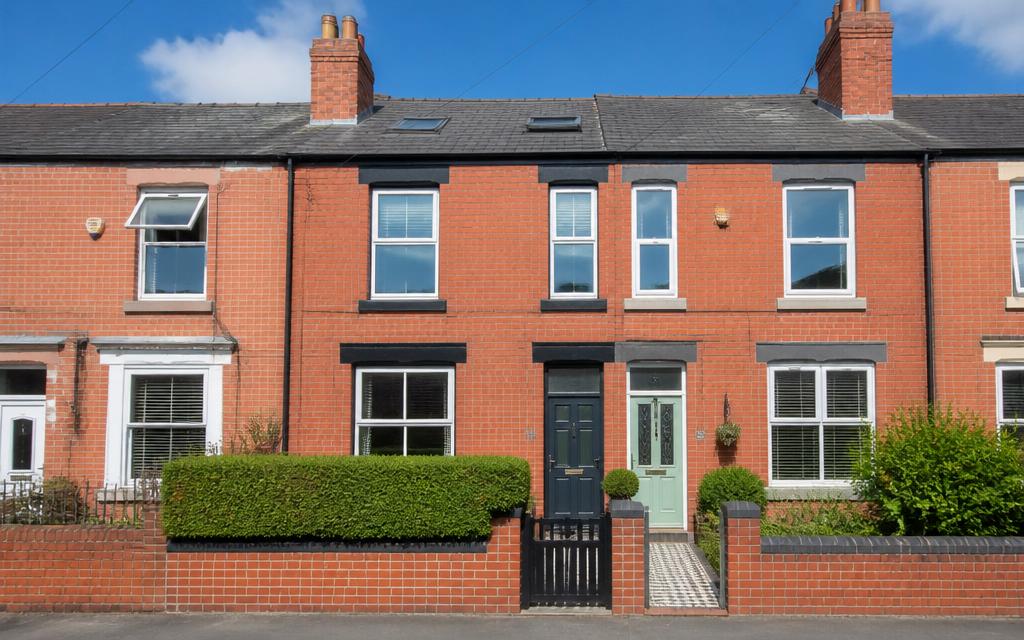
The harder problem is practical, not financial. You cannot view the property, meet the letting agent, or stand in the room when a builder tells you the roof needs work. That is the part most overseas investors underestimate, and it is the part a fully managed service exists to solve.
Why British expats keep buying UK property
Three reasons come up on almost every call we take from overseas.
It is a market you already understand. You know what a three-bedroom terrace is. You know roughly what a decent area looks like. You have probably owned a UK home. Compare that to buying property in a country where you do not know the legal system, the tenancy norms, or which neighbourhoods hold value.
It is priced in sterling, and so are your future plans. Most British expats we work with expect to come back eventually, or at least to retire with sterling costs. Building an asset in the currency you will one day spend removes a risk you would otherwise carry.
Northern yields work with the amount of capital expats typically have. The average property price in Leeds was £247,000 in May 2026, and £222,000 in Sheffield in March 2026, against a UK average of £268,000 and a Great Britain average of £329,000. The terraced stock we buy sits well below those city averages, which is what makes a workable rental yield possible.
Source: UK House Price Index, ONS and HM Land Registry, 2026
The three things that are genuinely different when you are non-resident
1. Stamp duty: there is a 2% surcharge
Non-UK residents buying residential property in England and Northern Ireland pay a 2% surcharge on top of every other applicable rate.
For an investment property, that stacks with the 5% additional dwelling surcharge, so a non-resident buying a buy-to-let pays 7% above the standard residential rates.
What that looks like at the price points we source:
| Purchase price | SDLT, UK resident buying an additional property | SDLT, non-resident buying an additional property | The non-resident premium |
|---|---|---|---|
| £95,000 | £4,750 | £6,650 | £1,900 |
| £120,000 | £6,000 | £8,400 | £2,400 |
| £150,000 | £8,000 | £11,000 | £3,000 |
The surcharge is a flat 2% of the purchase price, so it is easy to budget for. On a £120,000 property it is £2,400. Material, but it is not the thing that decides whether a deal works.
Two points worth knowing. Residency for this purpose is based on presence in the UK for at least 183 days in the 12 months before the purchase, not on your nationality or your tax status generally. And the 2% surcharge can be reclaimed if you become UK resident within two years of the purchase, which matters if you are already planning your return.
Source: HMRC Stamp Duty Land Tax guidance, rates in force 2026. Scotland and Wales operate separate systems, Land and Buildings Transaction Tax and Land Transaction Tax respectively, and neither applies a non-resident surcharge. Rates can change at any Budget. Verify current rates with your solicitor before exchange.
2. Rental income: the Non-Resident Landlord Scheme
If you live abroad and let out UK property, your rental income falls under HMRC's Non-Resident Landlord Scheme.
How it works. Unless HMRC has approved you to receive rent gross, your letting agent must deduct basic rate income tax, currently 20%, from your rental income and pay it to HMRC quarterly, before the money reaches you. Quarters run to 30 June, 30 September, 31 December and 31 March, with payment due within 30 days of each quarter end.
Letting agents must operate the scheme regardless of how much rent they collect. If there is no agent, the obligation falls on your tenant instead, but only where the rent they pay is more than £100 a week. HMRC can also instruct a tenant to operate the scheme below that threshold, for instance where a landlord has several tenants whose combined rent exceeds it.
You can apply to be paid gross. Form NRL1 for individuals, NRL2 for companies, NRL3 for trustees. Approval is normally granted where your UK tax affairs are up to date, and is typically backdated to the start of the quarter in which HMRC receives the application. You then declare the income through self assessment in the normal way.
Two things worth understanding about this.
The deduction is tax on account, not a final bill. It is collected before your allowable expenses are taken into account, so a landlord with a mortgage, management fees and maintenance costs will often have had too much deducted. That is recoverable through self assessment, but you are lending HMRC the difference in the meantime.
And the NRLS test is not the same test as the stamp duty one. NRLS applies where your usual place of abode is outside the UK. The stamp duty surcharge uses a 183-day presence test. They are similar but not identical, and it is possible to fall on different sides of each.
Source: HMRC Property Income Manual PIM4820 and PIM4830, HMRC Non-resident Landlords Scheme guidance notes for letting agents and tenants, and Income Tax Act 2007 Part 15 Chapter 2. Position as at July 2026.
3. Mortgages: a smaller pool of lenders
This is the practical constraint that catches people out.
Expat buy-to-let mortgages exist, but the lender pool is much smaller than for UK residents. High street lenders often decline. The lenders who do offer them are typically specialist and building society based, and they tend to want a larger deposit, charge a higher rate, and apply criteria around your country of residence, the currency you are paid in, and whether your employer is internationally recognised.
Some countries are straightforwardly acceptable to lenders. Others are not, usually for sanctions or anti-money-laundering reasons rather than anything to do with you.
The practical implication: find out whether you can borrow before you fall in love with a property. A broker who does expat lending regularly will tell you in one conversation what is possible and roughly on what terms. That conversation should happen first, not last.
What you cannot do from abroad, and what that means
Being honest about this is more useful than pretending it is frictionless.
You cannot walk the street at eight in the evening to see what it feels like. You cannot sit in the letting agent's office and read the room. You cannot look at the builder's work in person and decide whether it is good enough. You cannot attend a viewing, so you are relying on someone else's judgement about condition, and on photographs, which flatter.
That is a genuine loss of control, and anyone who tells you otherwise is selling.
What replaces it is process and evidence. Documented specifications rather than verbal assurances. Photographs at each stage rather than at the end. A named person you can reach rather than a general inbox. Real figures on completed purchases rather than projections.
If a company sourcing property for you overseas cannot show you what they have already delivered, with addresses, dates and numbers, that is the point to walk away. Distance makes verification harder, which makes evidence matter more, not less.
How the hands-free model works when you are overseas
Our service was not built for expats specifically. It turns out to suit them better than anyone.
We source the property, handle the purchase, manage the refurbishment, find the tenant and manage the tenancy. For a UK-based investor that is a convenience: they could do it themselves with enough weekends. For someone in Singapore or Dubai it is closer to the only way the transaction realistically happens. Here is how it works.
Each client gets a dedicated WhatsApp group with the team working on their purchase. That sounds like a small detail. Overseas clients consistently tell us it is the thing that makes the difference, because it collapses the time zone problem. You wake up to an update rather than waiting for a call window.
A real overseas purchase
Charlie and Priya, investing from Singapore
Charlie and Priya were living in Singapore when they invested. They did not expect to stay permanently, and wanted something established in the UK that would grow in value and generate income while they were abroad.
They bought in LS10, Leeds, in January 2020, for £107,500 all in including deposit, sourcing, purchase costs and refurbishment. The property was valued at £160,000 in 2026, and rent has moved from £634 to £895 per month.
Total gain of £107,500 on £107,500 invested. A 222% total return, or 21.5% per year.
In their words, being in Singapore, the WhatsApp group made everything feel local. They were never out of the loop, and the process was seamless.
2026 figure is a desktop valuation. Full methodology and disclaimers are set out on our case studies page. Past performance is not a reliable indicator of future results.
The honest trade-offs
Currency risk cuts both ways. If you are paid in dollars or dirhams and buying in sterling, exchange rate movement affects your entry cost and the value of your rental income in local terms. It can help you. It can also hurt.
Your total cost of entry is higher than a UK resident's. The 2% surcharge plus typically a larger mortgage deposit means you need more capital for the same property.
You will pay for advice you cannot avoid. Your tax position depends on where you are resident, whether a double taxation treaty applies, and what your home country does with UK rental income. That is not something we advise on, and it is not something to guess at. Budget for an accountant who handles non-resident landlords.
Selling has its own rules. Non-residents are within scope of UK capital gains tax on disposals of UK residential property. Factor that into your exit thinking rather than discovering it at the end.
Property is illiquid and returns are not guaranteed. Values and rents can fall as well as rise. That is true for everyone, and being overseas makes reacting slower.
Quick answers
Can I invest in UK property if I live abroad?
Yes. Living overseas does not prevent you from owning UK property, letting it to tenants, or borrowing against it. The UK has no restriction on non-resident ownership of residential property. What changes is the cost and the admin, not your right to buy.
Can British expats buy buy-to-let property in the UK?
Yes. There is no restriction on non-residents owning UK residential property. The differences are cost and administration: a 2% stamp duty surcharge, the Non-Resident Landlord Scheme for your rental income, and a smaller pool of mortgage lenders.
How much extra stamp duty do non-residents pay?
A 2% surcharge on the whole purchase price, on top of all other applicable rates. On a £120,000 property that is £2,400. For an investment property it stacks with the 5% additional dwelling surcharge, so a non-resident pays 7% above standard residential rates.
Can I get a buy-to-let mortgage as an expat?
Usually, but from a smaller group of lenders, typically with a larger deposit and a higher rate than a UK resident would get. Criteria vary by your country of residence, the currency you are paid in and your employer. Speak to a broker who handles expat lending before you start looking at property.
Do I pay UK tax on rental income if I live abroad?
Yes. UK rental income is taxable in the UK regardless of where you live. Under the Non-Resident Landlord Scheme, your letting agent must deduct basic rate tax at 20% and pay it to HMRC quarterly, unless HMRC has approved you to receive rent gross. Your position in your country of residence depends on local rules and any double taxation treaty, which is a question for a qualified adviser.
How do I get my rent paid without tax deducted?
Apply to HMRC on form NRL1 if you are an individual, NRL2 for a company or NRL3 for a trustee. Approval is normally granted where your UK tax affairs are up to date, and is typically backdated to the start of the quarter in which HMRC receives the application. You then declare the rental income through self assessment. It does not reduce the tax you owe, it changes when and how you pay it.
Will my tenant have to deduct tax from my rent?
Only if there is no letting agent and the rent they pay is more than £100 a week. Where a letting agent is involved, the agent operates the scheme and the tenant has no obligation, regardless of the rent. HMRC can also instruct a tenant to operate the scheme below the £100 threshold in some circumstances.
How much do I need to invest?
Our minimum is £75,000. That reflects the deposit, purchase costs, refurbishment and our fee on the kind of property we source.
Do I need to visit the UK to buy?
No. Our clients complete purchases without travelling. Identity verification, mortgage applications and conveyancing are all handled remotely. Some clients visit later, once the property is let.
Where do you buy?
Leeds and Sheffield. Our completed case studies are concentrated in Leeds postcodes LS9 to LS13, and Sheffield is where we source most actively today.
Can I speak to an investor who has done this from overseas?
Yes. Ask and we will put you in touch with a client who invested from abroad. No script and no filter.
What happens if the tenant stops paying while I am 6,000 miles away?
The same process runs whether you are in Leeds or Lagos: we manage the tenancy, chase arrears and handle the legal route if it comes to that. You are informed, not involved.
Related guides
- Tax on Rental Income: What UK Landlords Actually Pay
How tax on rental income works for UK landlords: allowable expenses, the mortgage interest rules, limited companies, Making Tax Digital and selling up. By Shiv Haria.
- Buy-to-Let Mortgages Explained: How They Actually Work
What a buy-to-let mortgage is, how lenders decide what you can borrow, the criteria they check and how the process runs. Plain English from Shiv Haria.
- Why Buying a Flat in London Is No Longer a Smart Investment
Leasehold costs, stalled capital growth and thin net yields have made London flats a poor fit for income investors. Shiv Haria on the northern alternative, with sources.
- How Much Deposit Do You Need for a Buy-to-Let Mortgage?
How much deposit you actually need for a buy-to-let mortgage, what lenders check, and the costs first-time landlords forget. By Shiv Haria.
Shiv Haria is the founder of Lifestyle Property Group, an award-winning property investment company specialising in hands-free buy-to-let in Leeds and Sheffield since 2016.
Want the numbers on a real example? Model a deal in the calculator or book a free consultation.
Lifestyle Property Group is not authorised or regulated by the Financial Conduct Authority. We provide a property sourcing and management service and do not provide financial, tax or legal advice. Tax rules for non-UK residents depend on individual circumstances and change over time. The figures in this article reflect rates in force at the date of review and should be verified with a qualified adviser before you commit to a purchase. All investments carry risk and returns are not guaranteed. Property values and rental income can fall as well as rise.