
Capital Gains Tax on Selling a Rental Property: What Landlords Actually Pay
Last reviewed: July 2026
This article explains how the calculation works. It is not tax advice, and what you actually owe depends on your income, your costs and how you hold the property. That is a conversation for an accountant, ideally before you exchange rather than after.
It is the third of three taxes, not a surprise at the end
Property has an entry tax, a running tax and an exit tax. Most people model the first two and discover the third.
Stamp duty is paid on purchase and is not deductible against rental income. It is, however, deductible against a future capital gain.
Income tax applies to rental profit each year while you hold the property.
Capital gains tax applies to the growth in value when you sell.
Modelled together at the outset, none of them is a shock. Modelled separately, the third one arrives at the worst possible moment, which is after you have already agreed a sale price. The entry cost is set out in stamp duty on buy-to-let: what landlords actually pay, and the running cost in tax on rental income: what UK landlords actually pay.
What the gain actually is
The gain is not the difference between what you paid and what you sold for. Several costs come off first.
Deductible from the gain:
- The original purchase price
- Stamp duty paid on the purchase
- Legal and survey fees on the purchase
- Estate agent and legal fees on the sale
- Capital improvements made while you owned it
Not deductible from the gain:
- Repairs and maintenance, which are income tax expenses instead
- Mortgage interest, likewise
- Mortgage arrangement or redemption fees
The repairs versus improvements line matters here as much as it does for income tax. Replacing a broken boiler with an equivalent one is a repair, deductible against rental income. Adding an extension or converting a loft is an improvement, deductible against the eventual gain. The same expenditure cannot count twice.
Keep the invoices. A refurbishment receipt from 2019 is worth real money in 2029, and reconstructing it later is close to impossible.
The rates, and how the band works
For 2026/27, capital gains tax on residential property is charged at:
| Portion of the gain | Rate |
|---|---|
| Falling within your unused basic rate band | 18% |
| Above the basic rate band | 24% |
Residential property rates were aligned with other chargeable assets from 30 October 2024, so there is no longer a separate higher rate applying only to property.
How the rate is decided. The gain is stacked on top of your other taxable income for the year. If your salary already uses your basic rate band, the whole gain is taxed at 24%. If part of the band is unused, that part of the gain is taxed at 18% and the rest at 24%.
The annual exempt amount is £3,000 for individuals for 2026/27, down from £6,000 in 2023/24 and £12,300 in 2022/23. Most trusts get £1,500. Net gains up to the exempt amount are not taxed; only the excess is.
That reduction is why more landlords now have a bill. At £12,300 a modest gain was often covered. At £3,000 it very rarely is.
Source: HMRC Capital Gains Tax rates and allowances, 2026/27. Rates and thresholds are set by legislation and change at fiscal events.
The 60-day rule
This is the single most common expensive mistake, and it is entirely avoidable.
You have 60 days from the completion date to report a UK residential property disposal and pay the tax due, through HMRC's Capital Gains Tax on UK property service. Not through your self assessment return. Not by the following 31 January. Those are separate obligations with separate deadlines.
Complete on 10 September and the deadline is 9 November.
The penalty is immediate. £100 for a late return, with interest and further charges accruing.
Two variations worth knowing. UK residents only need to file where tax is actually due. Non-UK residents must file within 60 days regardless of whether any tax is owed, which trips up overseas landlords who assume a small gain means no paperwork. The wider picture for non-residents is in our guide to UK property investment for British expats.
What it looks like on a real property
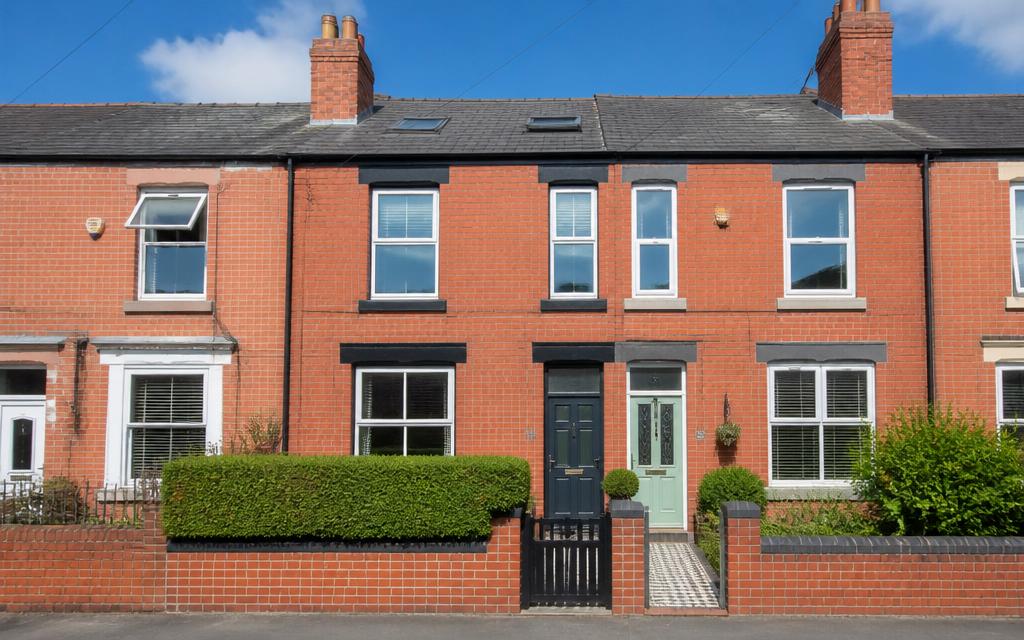
Take one of our completed client purchases. LS11, Leeds, bought November 2019 at £89,500 and valued at £160,000 in 2026.
Illustrative calculation, with assumed costs clearly marked:
| Item | Amount |
|---|---|
| Sale price | £160,000 |
| Less purchase price | (£89,500) |
| Less stamp duty paid on purchase | (£4,475) |
| Less purchase legal and survey fees (assumed) | (£1,500) |
| Less capital improvements (assumed) | (£8,000) |
| Less sale agent and legal fees (assumed) | (£3,600) |
| Gain | £52,925 |
| Less annual exempt amount | (£3,000) |
| Taxable gain | £49,925 |
Tax due, depending on band: roughly £8,987 at 18%, or £11,982 at 24%.
Read the assumptions carefully. The purchase price, the sale value and the stamp duty are real. The legal fees, improvement costs and sale costs are illustrative, because the actual figures vary by property and by solicitor. Your own numbers will differ, and only your invoices and your accountant can produce the real answer.
Purchase price and 2026 valuation from Lifestyle Property Group completed acquisitions. 2026 figure is a desktop valuation. Full methodology and disclaimers on our case studies page. Past performance is not a reliable indicator of future results.
If you hold through a limited company
The mechanics change entirely.
A company does not pay capital gains tax. Gains form part of the company's profits and are charged to corporation tax, reported through the company's CT600 return rather than through the 60-day property service. The annual exempt amount does not apply.
Getting money out of the company afterwards is a separate taxable event, which is the point most comparisons of personal against corporate ownership skip over.
Which structure suits you is not a capital gains question in isolation. It depends on your income, how long you intend to hold, whether you need the proceeds personally, and how many properties you own. That is an accountant's question, and it is better asked before you buy than at the point of sale. The running position is set out in our rental income tax guide.
Two mechanical features of the rules
Stated as facts rather than as suggestions, because how they apply to you depends on your circumstances.
Losses. Capital losses on other chargeable assets can be set against gains in the same tax year, and unused losses can be carried forward.
Joint ownership. Where a property is owned jointly, each owner has their own annual exempt amount and their own basic rate band. Transfers between spouses and civil partners are made on a no-gain, no-loss basis.
Private Residence Relief exempts a property that has been your only or main home throughout your ownership. A property bought purely as a rental will not usually qualify, though partial relief can apply where a property was your home for part of the period. The rules on this are detailed and the outcome is genuinely circumstantial.
Where capital gains tax fits in the decision
It is the exit cost, and its size is a function of how well the investment did. A large capital gains bill means a large gain, which is not the worst problem to have.
What matters is that it is in the model from the beginning, and that the paperwork is not left to chance. The 60-day clock starts at completion, not when you get round to it.
The rates and the exempt amount are set by legislation and change at fiscal events. Check the current position at gov.uk, or with your accountant, when a sale is actually in prospect rather than relying on an article.
We source, refurbish, let and manage the property. Your accountant handles how it is taxed on the way out. Here is how it works, and you can model a purchase in the investment calculator.
Quick answers
Do I pay capital gains tax when I sell a rental property?
Yes, if you sell at a gain and own the property personally. For 2026/27 the rate is 18% on the portion of the gain within your unused basic rate band and 24% above it, after deducting the £3,000 annual exempt amount.
How much is capital gains tax on property in 2026/27?
18% or 24%, depending on where the gain sits relative to your basic rate band. Residential property rates were aligned with other assets from 30 October 2024, so there is no longer a separate property rate.
What is the capital gains tax allowance?
£3,000 for individuals for 2026/27, and £1,500 for most trusts. It was £6,000 in 2023/24 and £12,300 in 2022/23. It cannot be carried forward.
What is the 60-day capital gains tax rule?
You must report and pay capital gains tax on a UK residential property disposal within 60 days of the completion date, through HMRC's Capital Gains Tax on UK property service. This is separate from your self assessment return and cannot wait for it. The penalty for a late return starts at £100 plus interest.
What can I deduct from a property capital gain?
The original purchase price, stamp duty paid on purchase, legal and survey fees on both purchase and sale, estate agent fees, and capital improvements. Repairs, maintenance and mortgage interest are not deductible against the gain, because they are income tax expenses instead.
Is a new kitchen deductible against capital gains tax?
It depends on whether it is a repair or an improvement. Replacing a kitchen with an equivalent one is generally a repair, set against rental income. Substantially upgrading or extending is generally an improvement, set against the gain. The distinction is fact-specific and worth confirming with your accountant before you spend.
Do I pay capital gains tax if I sell through a limited company?
No. A company pays corporation tax on the gain as part of its profits, reported through its CT600. The 60-day property service and the annual exempt amount do not apply. Extracting the proceeds from the company is a separate taxable event.
Do non-UK residents pay capital gains tax on UK property?
Yes. Non-residents are within scope on disposals of UK residential property and receive the same £3,000 annual exempt amount. Unlike UK residents, they must file a return within 60 days of completion whether or not any tax is due.
Do I pay capital gains tax on my own home?
Not usually. Private Residence Relief exempts a property that has been your only or main home throughout your ownership. Partial relief may apply where it was your home for only part of the period.
Related guides
- The UK Buy-to-Let Market in 2026: What's Actually Changed
Shiv Haria on the 2026 buy-to-let rule changes: the Renters' Rights Act now in force, Making Tax Digital, EPC C by 2030, and what it all means for landlords.
- Renting Out Your Home: Consent to Let and Switching Your Mortgage to Buy-to-Let
How to rent out your home legally: consent to let versus switching your mortgage to buy-to-let, what lenders allow, and the traps accidental landlords hit.
- Let to Buy Explained: Keep Your Home as a Rental and Buy the Next One
How let to buy works: remortgage your current home as a rental, release equity, and buy your next home. The numbers, the stamp duty catch and the risks.
- Why Buying a Flat in London Is No Longer a Smart Investment
Leasehold costs, stalled capital growth and thin net yields have made London flats a poor fit for income investors. Shiv Haria on the northern alternative, with sources.
Shiv Haria is the founder of Lifestyle Property Group, an award-winning property investment company specialising in hands-free buy-to-let in Leeds and Sheffield since 2016.
Want the numbers on a real example? Model a deal in the calculator or book a free consultation.
This article is general information, not financial advice. Mortgage criteria, tax rates and stamp duty change; check current figures and seek independent financial, tax and legal advice before investing. Property values and rental income can fall as well as rise.